
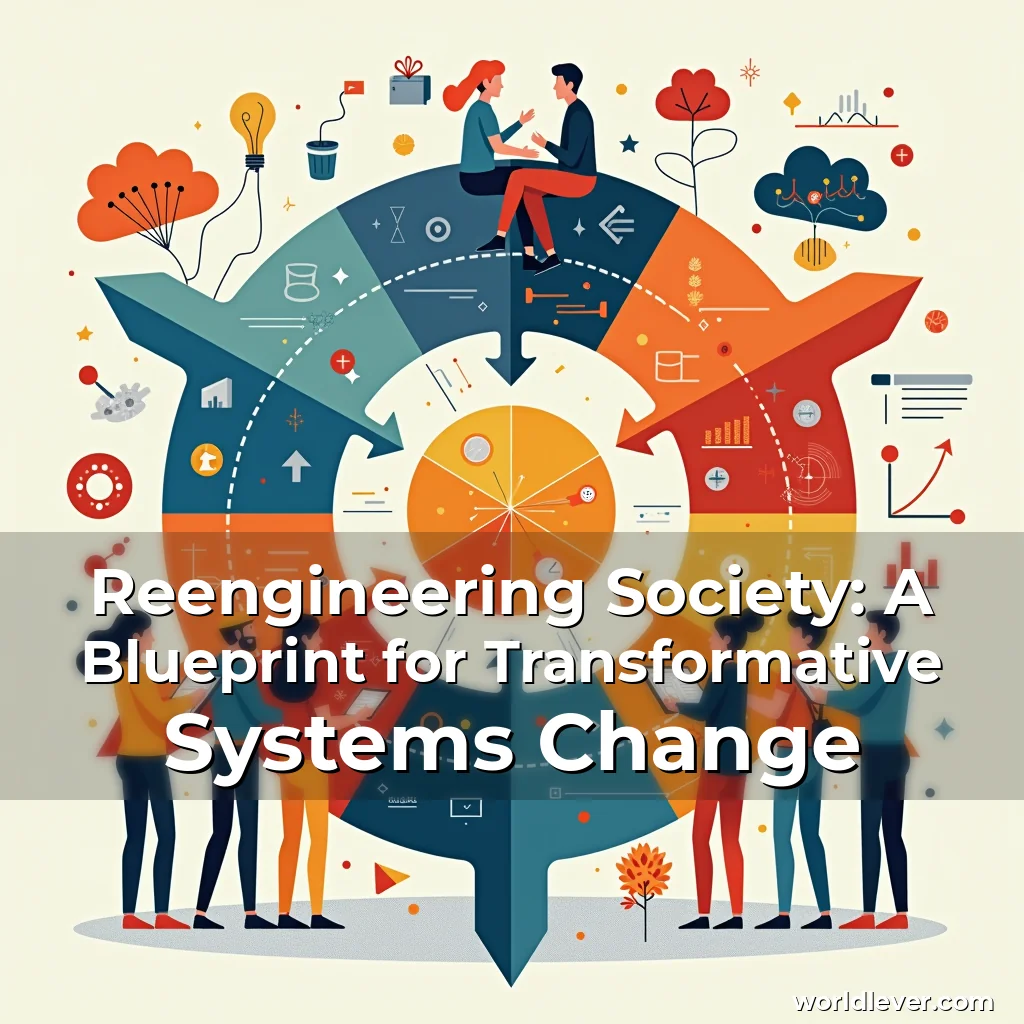
Reengineering Society: A Blueprint for Transformative Systems Change
In an era defined by unprecedented challenges—from climate collapse to widening inequities—the concept of “systems change” has emerged as both a necessity and a revolutionary approach to solving complex problems.
This article explores the intricate web of societal structures, the drivers of systemic stagnation, and actionable pathways to catalyze lasting transformation. By understanding systems change, we unlock the ability to reshape our world fundamentally.
The Nature of Systems Change: Beyond Surface-Level Fixes
Societal systems are vast, interconnected networks composed of institutions, norms, technologies, and human behaviors. Unlike isolated interventions, systems change targets the root causes embedded within these networks rather than merely addressing symptoms.
For instance, tackling poverty cannot rely solely on charity; instead, it demands overhauling labor markets, educational access, and wealth distribution mechanisms. This holistic perspective recognizes that solutions require altering the very architecture of society.
Systems change operates at multiple scales—local communities, national policies, and global governance—and demands collaboration across sectors. It acknowledges that no single actor holds the keys to transformation alone.
A critical component of systems change lies in identifying leverage points: areas within a system where small shifts can create cascading effects. These may include policy reforms, technological breakthroughs, or cultural paradigms.
- Interconnectedness: Modern systems are deeply intertwined; changing one part often reverberates across others. Understanding these links prevents unintended consequences.
- Power Dynamics: Dominant actors frequently resist structural shifts. Addressing imbalances in influence is essential for equitable outcomes.
- Adaptive Capacity: Resilient systems evolve in response to stressors. Fostering adaptability ensures long-term viability amid uncertainty.
The Urgency of Systemic Transformation: Why Now?
The accelerating pace of ecological degradation, socioeconomic fragmentation, and geopolitical tensions underscores the imperative for systems-level intervention. Incremental adjustments will fail to meet the scale of today’s crises.
Climatic tipping points loom as rising temperatures, biodiversity loss, and extreme weather events disrupt ecosystems and human societies alike. These disruptions demand a paradigm shift beyond mitigation toward regeneration and restoration.
Economically, traditional growth models have proven unsustainable, exacerbating inequality and resource depletion. New frameworks prioritizing circular economies, regenerative agriculture, and equitable value creation are vital for future stability.
Environmental Imperatives: The Climate Crisis as a Catalyst
Global carbon emissions reached 36.8 gigatons in 2022, marking yet another record high despite international agreements aimed at curbing them. This trajectory highlights the failure of piecemeal solutions like carbon taxes or renewable subsidies when left unmoored from systemic redesign.
Climate scientists warn that exceeding 1.5°C warming risks irreversible damage. To avoid catastrophe, systems change must integrate decarbonization with nature-based solutions, reshaping infrastructure, transportation, and industrial practices simultaneously.
Pillars of Effective Systems Change: Building Blocks for Progress
Successful systems change hinges on foundational principles that guide strategy, execution, and evaluation. These pillars provide a roadmap for navigating complexity and fostering sustainable progress.
One cornerstone is **systemic analysis**, which involves mapping relationships, dependencies, and feedback loops within a given domain. Without this clarity, efforts risk targeting ineffective levers or overlooking hidden variables.
Equally crucial is **inclusive participation**. Marginalized groups historically excluded from decision-making processes must lead in co-designing solutions. Their lived experiences offer invaluable insights into crafting equitable systems.
Fostering Adaptive Leadership
Leadership in systems change differs from conventional management. It requires humility, curiosity, and a willingness to embrace ambiguity. Leaders must act as facilitators rather than controllers, nurturing collaborative environments conducive to innovation.
Case studies show that organizations embedding adaptive leadership principles experience higher rates of successful transformation. For example, Danish wind energy initiatives succeeded due to leaders who prioritized partnerships among government, industry, and civil society.
Navigating Challenges: Overcoming Obstacles to Transformation
Despite its promise, systems change encounters significant barriers. Resistance from entrenched interests, institutional inertia, and public apathy often stall momentum. Recognizing these hurdles is the first step toward overcoming them.
Political polarization exemplifies one such obstacle. Partisan agendas frequently prioritize short-term gains over long-term systemic health. Bridging divides necessitates dialogue, empathy-building, and shared vision development across ideological lines.
Economic constraints further complicate matters. Funding innovative projects or scaling pilot programs remains challenging without supportive financial architectures. Creative financing mechanisms like green bonds or impact investing emerge as viable alternatives.
- Building Coalitions: Diverse stakeholders united around common goals amplify influence and legitimacy. Grassroots campaigns combined with corporate accountability efforts illustrate this synergy effectively.
- Leveraging Technology: Digital tools enhance data collection, communication, and mobilization. Social media platforms enable rapid dissemination of information and coordination of mass actions globally.
Lessons From History: Case Studies in Systems Success
Historically, few instances fully capture the essence of systems change. However, analyzing successes and setbacks offers critical learnings applicable to contemporary efforts.
The post-WWII Marshall Plan stands out as a landmark effort involving coordinated rebuilding across Europe through investment, trade liberalization, and democratic institution strengthening. While focused primarily on recovery, its multifaceted approach laid groundwork for enduring peace and prosperity.
Conversely, failed attempts reveal pitfalls. The U.S. War on Drugs, launched in the 1970s, illustrates how top-down enforcement without addressing underlying issues perpetuated cycles of violence and incarceration. This serves as cautionary tale regarding the limits of punitive measures alone.
Emerging Models: Innovations Across Sectors
Contemporary examples highlight novel approaches gaining traction. In education, Finland’s emphasis on teacher autonomy and student-centered learning has produced remarkable results compared to rigid standardized testing regimes elsewhere.
Healthcare reforms in Thailand demonstrate how universal coverage can be achieved through strategic public-private collaborations and phased implementation aligned with national priorities. Such models inspire replication worldwide amidst ongoing debates over accessibility versus cost.
The Role of Individuals: Catalyzing Collective Action
While large-scale systems drive much of societal function, individuals play pivotal roles in shaping outcomes. Personal choices ripple outward, influencing broader behavioral norms and expectations.
Consumption habits serve as prime illustration. Choosing ethically sourced products supports fair wages and reduces exploitation risks along supply chains. Similarly, advocating for local policies reinforces civic engagement and accountability.
Community organizing emerges as powerful tool. Initiatives ranging from urban gardening cooperatives to neighborhood safety councils showcase how grassroots movements effect tangible improvements locally before inspiring wider adoption.
Frameworks for Implementation: Tools to Drive Change
To translate theory into practice, robust methodologies support systematic planning and assessment. Various frameworks assist practitioners in diagnosing problems accurately and designing scalable interventions.
The **Theory of Change** model assists in visualizing desired impacts alongside necessary conditions. It maps backward from intended outcomes to identify required steps, making abstract objectives concrete and measurable.
Complementarily, **Appreciative Inquiry** focuses on strengths rather than deficits, encouraging teams to build upon existing positive aspects when envisioning futures. This constructive lens fosters optimism and motivation during turbulent times.
Looking Ahead: Future Trends Shaping Systems Change
As we stand at crossroads between crisis and opportunity, emerging trends signal evolving trajectories for systems transformation. Technological advancements, shifting demographics, and growing awareness present new possibilities and complexities alike.
Artificial intelligence promises enhanced predictive analytics useful for modeling socio-economic scenarios proactively. Yet ethical concerns surrounding algorithmic bias underscore need for careful integration respecting privacy rights and fairness principles.
Demographic shifts—including aging populations and increasing multiculturalism—require rethinking service delivery models and governance structures to reflect diversity inclusively. Policies must adapt flexibly rather than adhere rigidly to outdated constructs.
Conclusion
Sustainable systems change represents not only a solution pathway but also a profound philosophical shift towards viewing humanity as integral participant rather than passive observer within natural and social ecosystems.
By embracing interdisciplinary cooperation, valuing marginalized perspectives, and utilizing cutting-edge analytical techniques, we position ourselves better equipped than ever before to engineer resilient societies capable thriving amidst uncertainty.